
getting dress coded at work? let's talk.
I have about 40 minutes to write this before I have to go into work & get dress coded again. let's talk about the implications, & how workplace dress codes are tied to classism and racism.

yesterday, I got dress coded by my supervisor, who said I “look like I’m dressed to go hang out with my friends.” for context, it was cold in Chicago yesterday. temperatures have dropped to the 50s, and I walk 30 minutes to get to work. because of this, I was wearing a black zip up sweater. she sat me down, and explained I needed to wear cleaner gym shoes, business casual pants, and button ups to work. for even further context, I get paid minimum wage. think minimum wage, then think $4 less than that. my wage after taxes? I don’t even want to talk about that. but this essay is not about me. this essay is about where Eurocentric business casual wear stems from, and what it means as employers continue to reinforce it.
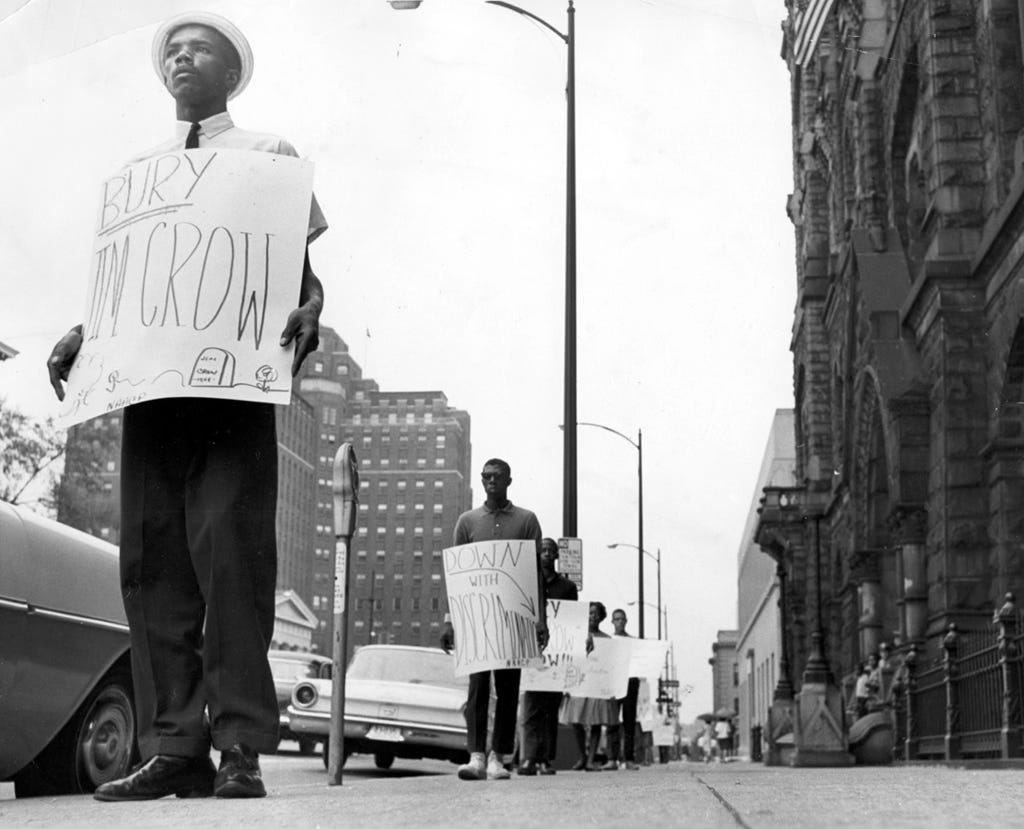
after the, so called “emancipation” of slaves, formerly Black slaves were expected to dress in a way that signaled “humility” and “gratitude.” during the first Jim Crow era (I say first, because Jim Crow laws are still prevalent in today’s world), “professional” jobs were reserved for white workers. employers refused to hire black workers because often times, they could not afford the expensive suits and dresses that white works wore, adhering to the “Eurocentric professional standard.” historically, even in service jobs, uniforms and dress codes were used to reinforce hierarchy. black workers were expected to wear servant like attire (maids’ uniforms, porters’ caps) while being denied opportunities to wear clothing associated with authority.
in the 1940s, when black and mexican youth in Los Angeles wore zoot suits; oversized and sharp suits — their clothing was criminalized. the police force framed these suits as symbols of delinquency, leading to what we now call the Zoot Suit Riots, where mobs literally stripped men of their clothes in the streets.
fashion became a weapon, a way for police to profile and dictate who was allowed to have dignity, and who they could strip dignity of. by the 1960s, the Civil Rights Movement took a different route: activists intentionally wore suits, ties, and dresses at marches and sit-ins. it was a strategy of survival, a way to look “professional” in the eyes of a white audience that equated dignity with Eurocentric standards of appearance. but even then, younger activists like the Black Panthers resisted this expectation, reclaiming leather jackets and afros as their uniform. their very existence was labeled as “radical,” and “threatening.” clothing has never just been about fabric. it was, and still is, a tool of control.
when someone gets “dress coded” at work today, it’s not just about fashion, it’s a part of a long history of policing marginalized people’s appearance to control access to jobs, dignity, and respect.
as employers continue to reinforce Eurocentric business casual wear in workplaces, they are continuing to make jobs inaccessible to marginalized people. what started as a tool of exclusion in the Jim Crow era has shifted, but the logic remains the same: only those who can afford to look the part are deemed professional enough to belong. in today’s world of Jim Crow, it’s often people of color in supervisory positions who are tasked with disciplining and dress coding employees, enforcing the same rules that once locked their own communities out of opportunities. the hierarchy continues to be maintained, policed from the top down. reminding us that “professionalism” is not a neutral standard, but a system designed to keep certain people in their place.
I’m wearing another zip-up hoodie today as I head into work, keeping in mind how my supervisor polices privilege through dress codes.
Im glad you wrote this. Such unreasonable demands! Sadly I often see how people of many different cultures self-police their appearance to fit into European culture. Not just when they are required to dress business casual style but also by completely eliminating colour from their wardrobes. Ugh.