
Why Humanitarian Systems Are Not Built to Respond to Climate Change
Written by a humanitarian practitioner and founder of the Kalaam Project, a nonprofit organization creating sustainable solutions in Afghanistan in response to climate-related disasters

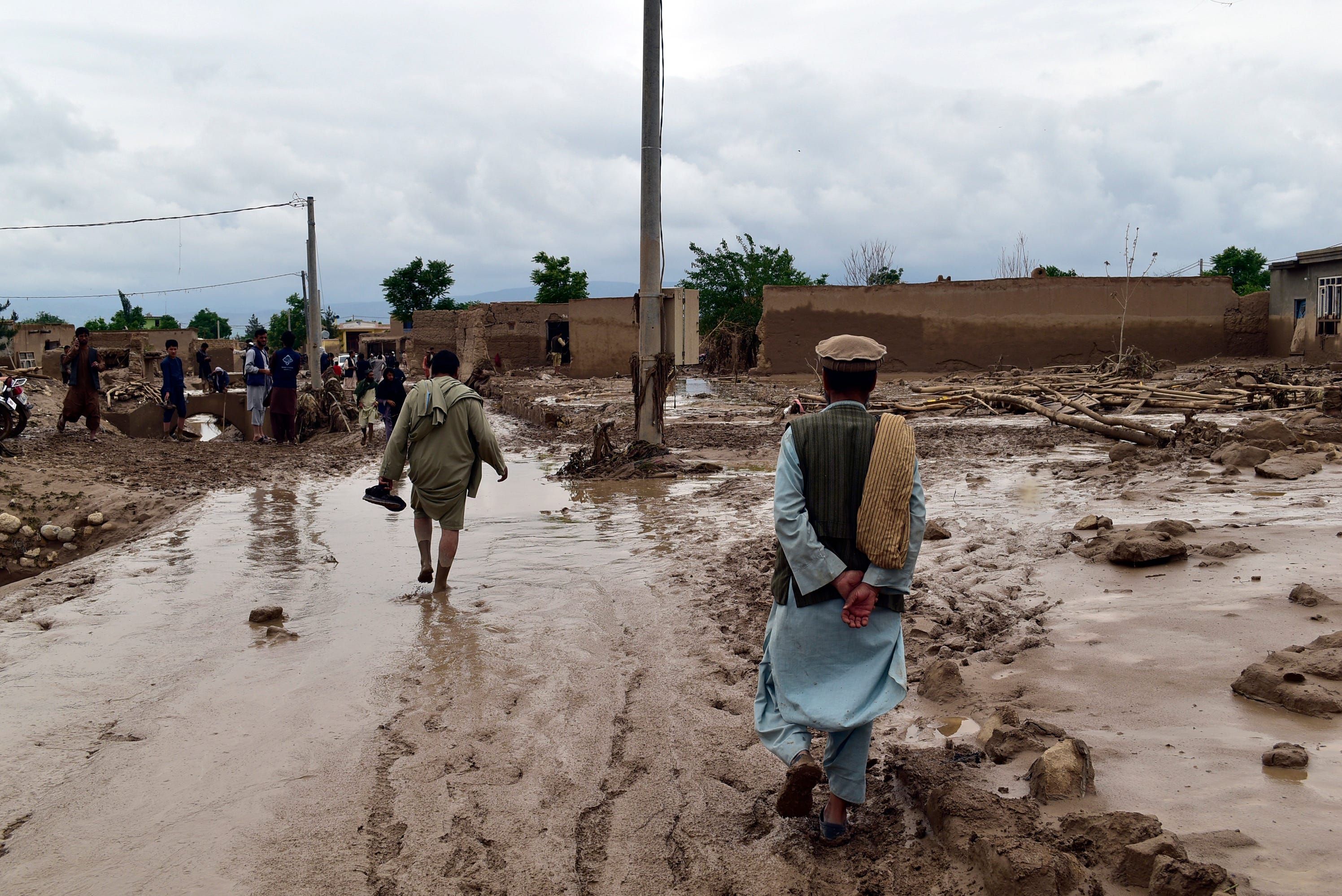
In the Khogyani district in Nangarhar, Afghanistan, the Khogyani River is eroding farmland and moving closer to a village that is home to hundreds of people. Wheat fields have begun to collapse into the river as the river’s course shifts inward. This is a direct consequence of climate change — more intense flooding, unstable water systems, and soil that can no longer retain water.
A similar environmental shift is documented in The Water Will Come (2017) by Jeff Goodell. Writing about Florida in the mid-2010s, Goodell describes how rising seas were already pushing inland by 2016, causing “sunny-day flooding” in places like Miami Beach. Roads flooded without rainfall, groundwater rose, and infrastructure began failing from below. Local governments responded with large-scale investments in pumps, elevated roads, and long-term flood mitigation systems. The environmental process in Florida and Khogyani is comparable, but the scale and type of response are not.
In Khogyani, protecting the village from further erosion would require a retaining seawall that would cost approximately 1,000,000 Afghanis, or about $15,000 USD. At the same time, international organizations, including the United Nations, are distributing tents and food packages following recent floods. A single tent costs around $281 USD, and thousands have been distributed in response to homes and livelihoods being destroyed.
Emergency aid is necessary in the event of displacement and crisis. Tents and hot food address the immediate needs of communities. But the underlying issue is that humanitarian systems were not built to address the repetitive crisis as a result of climate change. Humanitarian aid assumes that when a disaster occurs, aid is deployed, and then conditions stabilize enough for response teams to move on. But this assumption is no longer true because what we’re seeing as a result of climate change, is that the same communities experience the same “emergencies” year after year, without any structural change in what is actually producing them.
Displacement is being managed but the environmental degradation that makes land unlivable in the first place is being ignored. Typical humanitarian aid is not structured to sustain long-term infrastructure or environmental redesign, even when those are what would actually reduce future harm.
Humanitarian aid can respond to climate disasters, but it is not designed to resolve them. As a result, communities remain in a loop where the same forms of assistance are delivered repeatedly, while the conditions that create the need for that assistance remain unchanged.
The United Nations Office for the Coordination of Humanitarian Affairs defines humanitarian action as the provision of “life-saving assistance” during emergencies. This model is built for rapid response and measurable outputs, how many people received shelter, how many food packages were distributed. It is less equipped to prioritize interventions that reduce long-term vulnerability but require sustained investment and do not produce immediate results.
In Dead Aid (2009), Dambisa Moyo examines the effects of decades of foreign aid in sub-Saharan Africa. From the 1960s through the early 2000s, more than $1 trillion in aid flowed into the continent. Despite this, many countries experienced stagnant growth and persistent poverty. Moyo argues that when aid is delivered as a continuous stream of short-term relief, it can create dependency and disincentivize long-term development. Governments and systems begin to rely on external assistance instead of building internal capacity.
This pattern is visible in Afghanistan. Farmers receive food during periods of drought, but there is limited investment in restoring soil health or improving water systems. Communities receive tents after floods, but there is little support for infrastructure that would prevent those floods from causing repeated displacement.
In Afghanistan, my nonprofit organization, The Kalaam Project, has shifted its focus from emergency distributions to longer-term interventions aimed at sustainability. One example is soil regeneration workshops for farmers. Instead of providing food aid, we equip farmers with tools such as shovels and spades, along with fertilizer, legume seeds for cover crops, and earthworms to improve soil composition. The workshops also include training on water retention and soil management techniques.
The objective is to restore agricultural productivity so that farmers are less dependent on external assistance over time.
In response to repeated earthquake damage, we’re supporting the construction of earthquake-resistant housing, reducing the likelihood that homes will collapse during future seismic events. In areas facing water scarcity, solar-powered wells are being implemented to provide consistent access to water without requiring repeated emergency distribution.
These interventions are smaller in scale than those carried out by large international organizations, but they are designed to change long-term outcomes. They address the causes of vulnerability rather than only the effects.
The contrast between these approaches reflects a broader structural issue within humanitarian systems. Large organizations operate within frameworks that prioritize immediate, visible results, or what I like to call, initiatives that look good on camera. Preventative infrastructure and long-term development are more difficult to fund and measure, even when they are more cost-effective over time.
In Khogyani, the cost of building a retaining seawall that could protect an entire village is relatively low compared to the cumulative cost of repeated emergency aid. Yet the latter continues to be prioritized.
The situation in Khogyani, Afghanistan reflects this clearly. The river continues to erode land, and people continue to become internally displaced, moving their homes further inland. Crops are destroyed in floods and rainstorms, and the soil cannot retain water. In the meantime, larger organizations continue to distribute hot meals and tents. Without investment in prevention, these patterns will persist, leaving communities in a constant state of crisis.
Humanitarian aid is necessary, but its current structure leaves communities in humanitarian crisis in a limbo; suffering in the same cycles. Until there is a shift toward interventions and more sustainable measures, communities worldwide will continue to experience the same cycle of crisis and response.
This is why we’ve shifted our approach at the Kalaam Project. Instead of only responding to emergencies with short-term relief, we are focusing on sustainable solutions to help communities in Afghanistan become self-sufficient. Our initiatives like soil regeneration workshops, earthquake-resistant housing, and solar-powered wells are not separate from humanitarian response; they are a response to the limits of it. Humanitarian systems, as they currently exist, were not built for the repetition and scale of climate-driven crisis. They can respond to displacement, but not prevent the environmental breakdown that produces it. By investing in long-term, locally rooted infrastructure and resilience, we are moving away from a cycle of repeated emergency response and toward solutions that reduce the need for emergency response altogether.
About the Author
Sayeda Qader is an Afghan American essayist, writer, and humanitarian. She writes personal essays and investigative pieces exploring life in the Afghan diaspora, ongoing crises in Afghanistan, and the human impact of U.S. foreign policy. Sayeda is the founder of the Kalaam Project, a humanitarian aid organization providing sustainable, on-the-ground humanitarian aid to communities in Afghanistan. Her work blends storytelling, advocacy, and reporting.
This piece resonates deeply. The image of the Khogyani river eroding farmland is the kind of specific, grounded detail that cuts through the abstraction so much humanitarian writing hides behind. And the central argument is one the sector urgently needs to sit with honestly.
After 15 years working in Afghanistan, I felt the weight of exactly what you're describing. The donor pressure to show outputs, such as tents distributed, meals delivered, numbers logged, while the same communities returned to us season after season, flood after flood, earthquake after earthquake. Anticipatory action was always the harder conversation to have: too speculative for some donors, too slow for funding cycles, too difficult to fit into a log frame. And yet the crises kept repeating, almost on schedule.
What struck me most in your piece is the climate dimension, because it cuts across everything: agriculture, shelter, water, health, livelihoods, protection, education… the list goes on. Climate change doesn't respect sectoral silos, and yet our response architecture is built almost entirely around them. We'd respond to a flood in one column and a drought in another, when both were symptoms of the same unravelling.
The Dead Aid parallel is well-chosen. The $15,000 seawall versus the cumulative cost of repeated distributions is both accounting and structural failure. The seawall doesn't photograph well mid-construction.
The Kalaam Project is calling out the limitations of the humanitarian system and concurrently doing the harder work.
As someone who also writes alongside this work, I find it rare and genuinely valuable when a practitioner can make a riverbank in Nangarhar feel urgent to someone who has never heard of Khogyani. The sector has no shortage of policy briefs. It needs more voices like yours.